Documentation
Thesis Grill
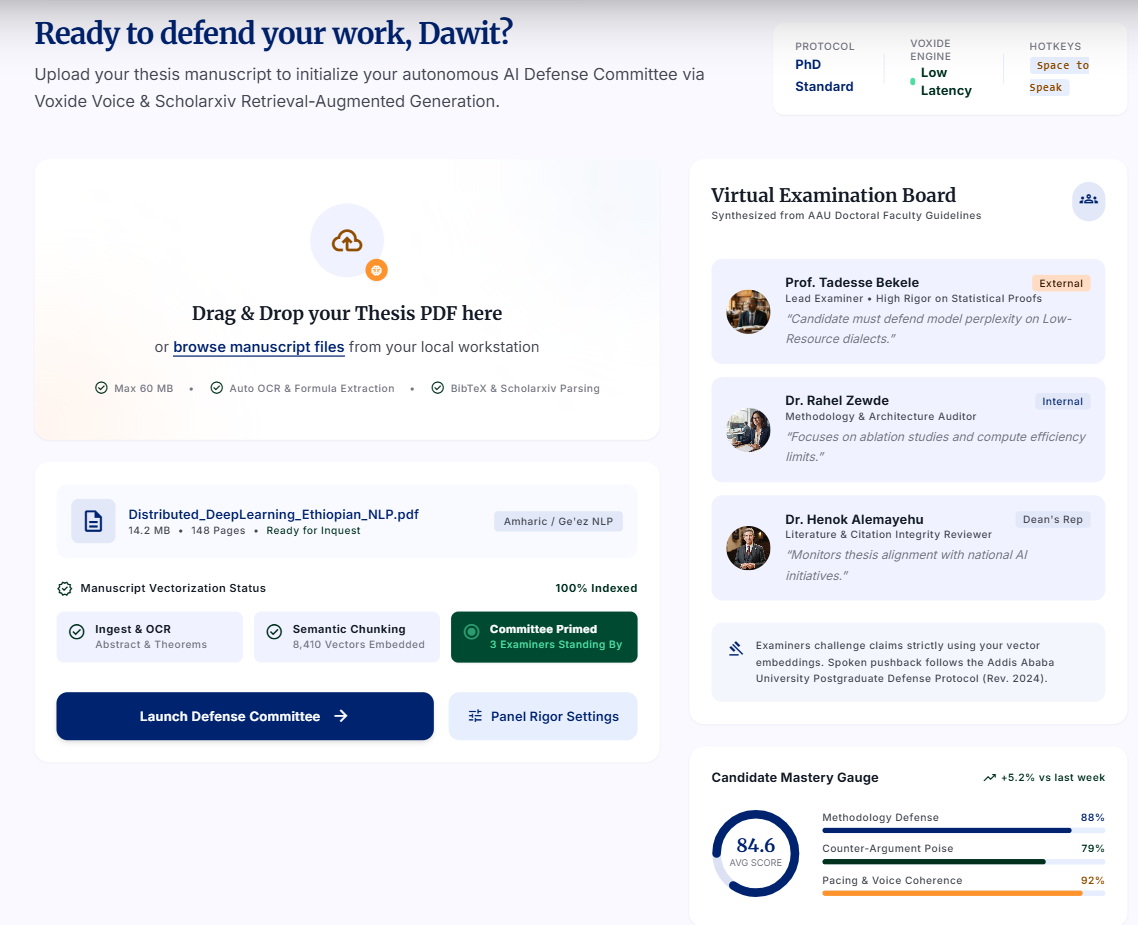
A voice-first thesis defense rehearsal agent. Upload your thesis, and Thesis Grill will grill you with rubric-based questions — just like a real defense committee.
Quick Start
Prerequisites
- Docker & Docker Compose
- Python 3.12+
1. Start the database
docker compose up -d
This spins up PostgreSQL 16 with the pgvector extension.
2. Set up the backend
cd backend
python -m venv .venv
source .venv/bin/activate
pip install -r requirements.txt
3. Configure environment
Copy the example env file and fill in your keys:
cp .env.example backend/.env
| Variable | Description |
|---|---|
DATABASE_URL | PostgreSQL connection string |
SCHOLARXIV_API_KEY | API key for paper lookups |
VOXIDE_PUBLISHABLE_KEY | Publishable key for voice service |
4. Run the API
cd backend
uvicorn app.main:app --reload
5. Explore the API docs
| URL | Interface |
|---|---|
| localhost:8000/docs | Swagger UI (interactive) |
| localhost:8000/redoc | ReDoc (reference) |
| localhost:8000/health | Health check |
Project Structure
├── docker-compose.yml          # PostgreSQL + pgvector
├── backend/
│   ├── requirements.txt
│   └── app/
│       ├── main.py             # FastAPI entry point
│       ├── core/
│       │   ├── config.py       # Pydantic BaseSettings
│       │   └── database.py     # SQLAlchemy engine & session
│       ├── models/             # SQLAlchemy ORM models
│       ├── schemas/            # Pydantic request/response schemas
│       ├── routers/            # API route handlers
│       └── services/           # Business logic layer
└── docs/                       # Architecture & API documentation
Architecture
The backend follows Clean Architecture:
- Routers → HTTP layer (thin, delegates to services)
- Services → Business logic (RAG ingestion, rubric engine)
- Models → Database entities (SQLAlchemy + pgvector)
- Schemas → Validation & serialization (Pydantic)
License
Private — all rights reserved.
